|

Custom Search
Welcome to the Cocktail Garnish GuideHere we look at just about every cocktail garnish you can use to decorate your cocktails
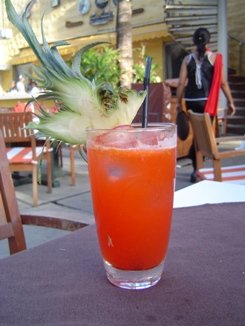
Just as a cocktail needs to taste good, it needs to look good as well. Forget multicolored plastic straws and umbrellas. You want to make your cocktail garnish mostly with fruit and other edibles. Make sure the garnish you use is fresh. The specific cocktail garnish used, can give a hit as to the taste of the cocktail. For example, lemon or lime can indicate a tangy, citrussy taste. A maraschino cherry can indicate a sweet taste, like in the case of a Sweet Martini.
The idea is to be creative, just like when mixing cocktails - see our Cocktail Mixing Guide for more. Also have a look at our extensive Cocktail Recipes Guide.
Here is a list of cocktail garnishes that bartenders commonly use:
• Stuffed olive on a cocktail stick (think Dry Martini)
• A “sail” (or “flag”) – a whole slice of citrus fruit on a cocktail stink, folded like a mast, with a cherry inside.
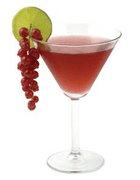
• A wedge of fruit (lemon, lime, orange, banana, apple, melon, peach, pineapple etc.) lodged on the brim. You can even use grapes. • A “wheel” – a whole slice of fruit, on the brim or in the glass
• Candy, like a marshmallow, to go into sweet drinks, like Dom Pedro. • Celery sticks, which are typically used in Bloody Mary’s (see our Vodka Cocktail Guide).
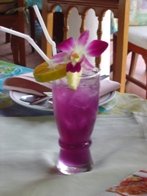
• Sugar cane • Peppers • Chillies • Coffee beans, typically used in cocktails with sambuca • Shrimps • Pickles • Whipped cream, often used in drinks containing coffee • Chocolate syrup and chocolate shavings • Flowers
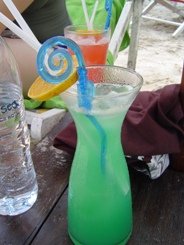
Non-edible cocktail garnish include swizzle sticks (pictured right), straws and cocktail umbrellas. We believe you should limit these as far as possible as edible cocktail garnish is just so much more eye-appealing, interesting and tastier. Note that long cocktails are typical served with straws to make consumption easier. That does not mean you cannot stick a piece of fruit on the straw first.
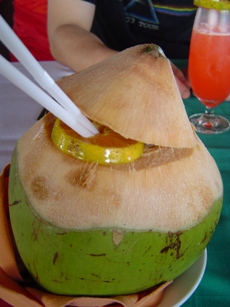
The ultimate is of course to make the cocktail in the garnish!. The picture below shows a Pina Colada (Rum Cocktail Recipes Guide) made INSIDE a coconut. Now that is truly a cocktail garnish!.
The only thing limiting you when it come to cocktail garnish is you imagination. As always, Cocktail Mixing Master encourages you to experiment with your cocktail garnishes.
Custom Search
Go to the Bartending Guide from the Cocktail Garnish Guide Home Page
|
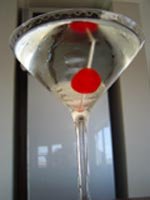 • Marascino (or cocktail) cherry. This is probably the most commonly used garnish and is typically used to garnish sweet drinks, like Sweet Martini’s.
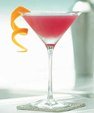 • A “twist” – a narrow piece of fruit zest (the outside part of citrus peel – it does not include the white part of the skin), folded or twisted and dropped in the drink, or draped on the brim of the glass.
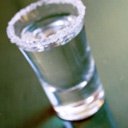 • “Frosting”. Wet the rim of the glass by dipping it in a saucer with water or egg white. Then dip it in a saucer with sugar or salt (in the case of Margaritas) to give it a frosted effect around the rim. Some mixologists refer to frosting as the effect on glasses stored in ice or a fridge.